What the Insurance Industry Is Telling San Francisco Homeowners About Their Exterior Siding
Insurers have become very direct with San Francisco homeowners about exterior risk. Underwriters flag moisture intrusion, combustible cladding, improper flashing, and fastener corrosion as the leading loss drivers on coastal properties. Those issues are not abstract. They show up on Outer Sunset and Richmond District elevations that see salt-laden fog for more than 150 days a year. They show up on Marina waterfront walls where wind-driven rain forces water behind face-nailed boards. They show up on Victorian and Edwardian facades that never received a continuous weather resistant barrier. In 2026, carriers are rewarding homes that install noncombustible fiber cement with a documented weather barrier and correct flashing sequence. They are also scrutinizing claims when siding installation fails to meet manufacturer and code specifications. That pressure has changed how responsible contractors specify work for siding installation San Francisco, and it has made permit, product, and workmanship decisions matter to premiums and coverage outcomes.
Why San Francisco homes face different siding risk than the rest of California
San Francisco has a coastal climate, complex historic housing, and microclimates that swing between fog belt and sun belt in a twenty minute drive. The city’s west side sits in the path of Karl the Fog that rolls in off the Pacific at Ocean Beach and Golden Gate Park. Those neighborhoods carry a salt air load that attacks unprotected fasteners and breaks paint films early. The eastern neighborhoods such as the Mission and Potrero Hill see hotter, drier days with higher ultraviolet exposure that stress caulk joints and reveal lines. Waterfront zones like the Marina and Embarcadero deal with tidal salt spray and wind uplift. These conditions raise moisture and corrosion risk, and that is what insurance underwriters price.
Housing stock is also unique. Many homes are Victorian and Edwardian with layered trims, bay windows, and decorative cornices. There are stucco-over-wood assemblies from the 1920s to 1940s, and mid-century and infill homes with plywood or OSB sheathing behind thin siding. Penetrations are dense on these facades, which creates many potential failure points around windows, doors, and balcony terminations. The result is that siding installation in San Francisco is about a complete wall system, not just a cladding change. Insurers know this, and so do adjusters who inspect claims after storms or long moisture cycles.
What carriers are saying in 2026, and how that translates to a San Francisco installation
Across San Francisco County, major carriers and surplus lines underwriters now ask three questions before they will write or renew a policy on an older home. First, is the exterior cladding noncombustible, or at least Class A for flame spread. Second, is there a continuous weather resistant barrier that ties into window flashing and kickout flashings at roof-wall intersections. Third, are the fasteners and sealants specified for salt air exposure. Homes that can document yes to all three with photographs and permits tend to receive better terms and fewer exclusions.
A compliant installation uses fiber cement siding that meets ASTM C1186 and ASTM C1325 performance criteria and carries ASTM E136 noncombustible status, which corresponds to a Class A flame spread index under ASTM E84. James Hardie’s HardieZone 4 coastal system is built for salt exposure and moisture cycling found in the Outer Sunset, Outer Richmond, and Sea Cliff. Over this cladding, the weather barrier and flashing must be continuous. HardieWrap or an equivalent housewrap forms a drainage plane, Z-flashing covers each butt joint, drip caps and head flashings protect horizontal surfaces, and kickout flashing directs roof runoff into gutters. On the west side and waterfront, stainless steel fasteners prevent rust blooms that can bleed through paint within as little as three to five years if hot-dip galvanized nails are used too close to the ocean.
Insurers also watch for the face of workmanship. Over-driven fasteners that fracture fiber cement boards, skipped Z-flashing, unprimed cut edges, and gaps in caulk joints create predictable failure patterns by year three or four. Claims tied to those installation errors are at risk of denial when policies include excluded maintenance or neglect language. That is why proper specification and documented installation now serve as much as a financial instrument as a construction choice.
San Francisco’s 2026 permitting environment benefits homeowners who install the right way
San Francisco siding and window installation changed on January 1, 2026, when the 2025 California Building Codes took full effect and the Department of Building Inspection consolidated in-kind applications into the PermitSF digital portal. Routine in-kind fiber cement installations in residential zip codes including 94122, 94116, 94118, and 94114 now move through PermitSF with approval timelines as short as two business days when the submission package is correctly assembled. It is common to see approvals that quickly when the profile, exposure, and wall sections match original conditions and the package includes a weather barrier and flashing sequence diagram.
Contractors who still walk drawings to 49 South Van Ness Avenue or operate against pre-2026 paper workflows often add avoidable weeks. That delay can leave a home exposed after tear-off, especially during shoulder seasons. Insurers like documented speed and compliance because open-wall exposure correlates with loss risk if rain arrives. The combination of the PermitSF portal, a complete submittal, and an installer who sequences inspections correctly reduces that exposure window and makes the project easier to underwrite.
What San Francisco’s fog, salt air, and architecture demand from siding installation
The western neighborhoods sit in the Fog Belt that includes the Outer Sunset and Outer Richmond. The fog there carries salt and fine moisture that condense on shaded walls. On those elevations, fastener specification is non-negotiable. Stainless steel fasteners prevent the iron oxide staining that telegraphs through lighter ColorPlus finishes. Hot-dip galvanized may perform in milder zones, but stainless is the safer choice near Ocean Beach and the Cliff House overlook. Sealants need to be marine-grade polyurethane, not painter’s acrylic, on Marina and Embarcadero exposures. Flashing metal should be corrosion resistant, and joints should be minimal on windward faces to reduce water entry points.
Architectural complexity requires careful layout. Painted Ladies near Alamo Square and Pacific Heights have multiple trim profiles and bay projections. A typical HardiePlank Cedarmill install at a 4.5 inch reveal on historic elevations aligns with cornice and window head trims, but those reveal decisions must be made at takeoff and verified on site with mockups. HardieShingle accent gables can match historic textures without the maintenance load of wood shingles. In SoMa and Dogpatch, contemporary mixed-use facades often use HardiePanel vertical siding with battens for a clean field. These choices are not just design. They affect how water drains and how wind pressure interacts with the cladding.
System components matter. OSB sheathing needs to be flat and intact, and any dry rot must be cut out and replaced. A continuous weather resistant barrier, properly lapped and taped, must run behind trim and penetrate into window and door openings. Z-flashing belongs at every butt joint. Drip caps must be present at head casings and horizontal terminations. Kickout flashing should deflect roof runoff into gutters at rake terminations to avoid the common rot pattern at lower corners. Stainless steel or hot-dip galvanized fasteners must be driven flush without breaking the fiber cement board face. Cut edges should be field primed prior to placement to keep moisture out of the matrix. A proper starter strip, correct fastener spacing, and caulk bead continuity complete the specification. These are the details that carriers look for in installation documentation.
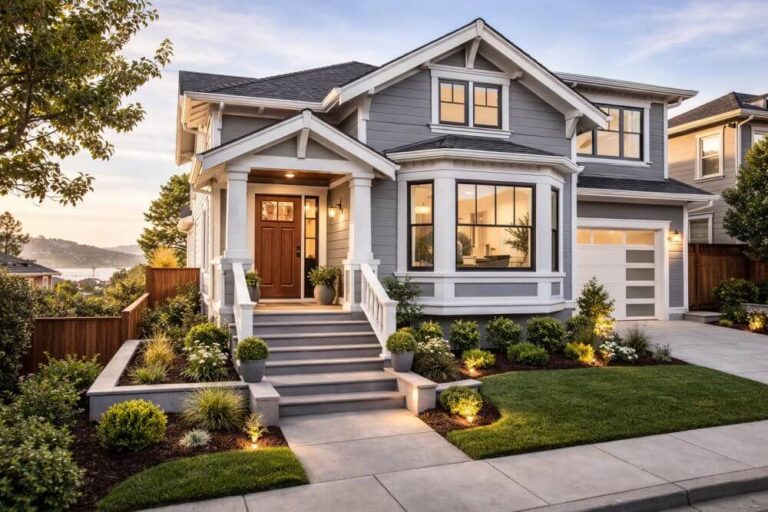
How the Fog Belt, Sun Belt, and Waterfront change the specification
Specifications vary across San Francisco microclimates even when the product line holds constant. Work in the Mission, Noe Valley, Bernal Heights, and Potrero Hill sun belt accepts hot-dip galvanized fasteners and standard polyurethane sealant due to lower salt deposition. The same product in the Outer Sunset or Sea Cliff switches to stainless fasteners and marine-grade sealant, a change driven by salt-air proximity and fog condensation patterns. On Marina and Embarcadero waterfronts, wind and channelized rain require additional Z-flashing detail at joints that face prevailing winds, and more frequent inspection of caulk joints during punch.
- Fog Belt: stainless steel fasteners, marine-grade polyurethane sealant, HardieZone 4 coastal system, tighter inspection of caulk joints. Sun Belt: hot-dip galvanized fasteners acceptable, standard polyurethane sealant, focus on UV-stable caulks and paint film integrity. Waterfront: stainless fasteners, marine-grade sealant, added Z-flashing redundancy, attention to windward butt joints and head flashings. Hillside zones like Twin Peaks and Diamond Heights: secure starter strips and correct nail pressure to resist uplift on gust days. Dense historic blocks in the Castro and Haight-Ashbury: careful sequencing and scaffold placement to protect ornate trims and cornices.
Why insurers favor fiber cement on San Francisco homes
Fiber cement is a noncombustible cladding that resists ignition and slows spread in dense neighborhoods. It carries ASTM E136 noncombustible status and a Class A flame spread index under ASTM E84. That matters in San Francisco where property lines are tight and exposure risk is high. Fiber cement also resists termites and woodpeckers and does not swell with fog moisture. James Hardie’s HardieZone 4 formulation is tuned for temperature and moisture cycling in coastal climates. ColorPlus factory finishes arrive with even coats and a 15-year fade warranty, which helps retain appearance without constant repainting.
Underwriters pay attention to these attributes. On underwriting questionnaires, tick boxes for Class A cladding and documented weather barrier work often lead to fewer exclusions. Claims teams also prefer a wall system that stops liquid water at the cladding and evacuates incidental moisture along a true drainage plane. That is what a HardiePlank or HardiePanel system installed over HardieWrap is built to do when specified and fastened correctly.
What insurers flag as installation red flags in San Francisco
Adjusters see patterns. West-facing walls in the 94122 and 94116 zip codes that lack kickout flashing show rot at roof-to-wall intersections within a decade of re-siding. Early paint failure on lighter facades in Sea Cliff is often fastener corrosion telegraphing through the film, a result of nails that are not stainless. Water stains near bay windows on Victorian elevations in Alamo Square often trace back to missing Z-flashing at lap joints and unsealed head flashings. Soffit and fascia interfaces near Sutro Tower and Twin Peaks valleys show uplift damage on gust days when starter strips are not mechanically anchored per manufacturer spacing. When installers document that these details are correct, claims are easier to evaluate and less likely to trigger maintenance exclusions.
A data point San Francisco homeowners can use in conversations with carriers
On in-kind fiber cement installations submitted through the PermitSF portal since February 13, 2026, approval has commonly arrived within two business days when the submittal includes a labeled wall section with https://s3.us-east-005.backblazeb2.com/best-exteriors-ca/siding-installation/why-james-hardie-siding-is-the-default-choice-for-san-francisco-victorians-and-edwardians.html housewrap, Z-flashing at butt joints, window head and sill flashing, kickout flashing at roof-wall, and a fastener schedule that specifies stainless in Fog Belt blocks. That predictable approval window shortens the open-wall period by a full week compared to pre-2026 paper workflows and reduces the chance of moisture intrusion during construction. Some carriers now accept the PermitSF approval date and the DBI final as third-party confirmations of code-compliant sequencing, which can support favorable renewal terms. Homeowners who keep those documents with photo logs siding installation San Francisco of weather barrier inspections often report smoother underwriting conversations.
Installation choices by building archetype across San Francisco
Victorian and Edwardian homes across Alamo Square, Pacific Heights, and Hayes Valley call for profile accuracy. HardiePlank Cedarmill lap at 4.5 or 5 inch reveals aligns with most historic trims. HardieShingle patterns in accent gables replicate historic texture with a more stable base. Trim packages often use HardieTrim with AZEK exterior elements where water sits longer near flat horizontal transitions. On these projects, Best practice places a continuous weather barrier behind ornate trims and brings window flashing into the barrier plane. This method protects original framing that has survived more than a century.
In the Richmond District and Sunset, post-1906 Marina-style homes often combine stucco and wood. Where siding meets stucco returns, installers integrate Z-flashing and backer rods to manage differential movement. In Dogpatch and SoMa, contemporary mixed-use structures benefit from HardiePanel vertical siding for a modern field with batten trims. Window head and sill flashing integration is critical in these rain-screen style designs because of wind-driven rain across the waterfront. Eichler-influenced ranch homes in Diamond Heights and Miraloma Park feature long, low walls that take uniform lap well, but need attention at long butt-joint sequences to maintain drainage planes.
How installation quality intersects with the 2025 California Building Code
The 2025 California Building Codes drive three important checks in San Francisco this year. First, water-resistive barrier installation and flashing integration must precede cladding, and inspectors can ask for the barrier inspection before siding goes on. Second, fastener type and spacing must match manufacturer instructions, and the DBI may ask for those specs during plan review or inspection. Third, fire and wildland urban interface provisions, though more acute in other counties, still encourage noncombustible cladding across the city’s dense fabric. A siding installation that meets ASTM references and manufacturer instructions satisfies those checks. A HardieZone 4 system installed over HardieWrap weather barrier with correct stainless or hot-dip galvanized fasteners, Z-flashing at all horizontal joints, and drip caps at head casings meets code intent and aligns with insurance preferences.
Permits, planning, and historic review in 2026
As of 2026, in-kind replacements run through the PermitSF online portal. Many projects land on the expedited pathway with approvals in as little as two business days, provided the exterior look and exposure match existing conditions. Historic district properties in Alamo Square, Liberty Hill, and Dolores Heights add SF Planning Department review under the Preservation Design Standards effective April 1, 2025, which can extend the timeline by three to eight weeks. A complete submittal includes elevations with exposure dimensions, a wall section with housewrap and flashing sequence, and a fastener schedule. DBI now expects digital photo documentation of the weather barrier layer for the inspection record. Smart installers collect those images during installation, which also serve as insurer-facing documentation if questions arise later.
What the cost picture looks like in San Francisco’s 2026 market
San Francisco’s labor market and architecture make siding installation more complex than in neighboring counties. Installed costs generally fall between $7 and $20 per square foot depending on material, trim packages, and elevation access. Smaller scope projects land around $5,600 to $22,000, while full Victorian replacements with ornate trims and bay windows typically range from $25,000 to $55,000. Fiber cement stands out on resale metrics, with industry resale returns often reported between 80 and 95 percent in urban California markets when profile and color are well chosen. Those returns rely on correct installation that avoids early maintenance and holds color. ColorPlus factory finishes and HardieZone 4 materials support that outcome. Financing options that cover 100 percent of project cost are common, and some energy sealing improvements under Title 24 can pair with local incentives when wall assemblies receive insulation upgrades behind the new cladding.
Installation details that insurers reward, and why they make sense on San Francisco homes
Three details repeatedly show up in underwriting feedback for coastal San Francisco. A continuous housewrap like HardieWrap, lapped correctly, taped at seams, and turned into window openings, provides the drainage plane that prevents sheathing saturation. Z-flashing at every butt joint and head flashing above every horizontal break interrupt water paths and keep streaking off finished faces. Stainless steel fasteners in fog and waterfront zones eliminate the rust nodules that form under paint near the ocean. Taken together with marine-grade polyurethane sealants, these details produce a wall system that resists fog moisture, high winds, and seasonal expansion and contraction. They also reduce the chance of a claim that turns into a coverage dispute over workmanship.
How Best Exteriors specifies James Hardie systems for San Francisco microclimates
James Hardie Elite Preferred installations in San Francisco follow the HardieZone 4 coastal specification. On Fog Belt jobs in the Outer Sunset and Outer Richmond, installers set HardiePlank lap siding over HardieWrap with stainless steel fasteners driven flush, Z-flashing at every butt joint, and field-primed cut edges prior to placement. On Marina and Embarcadero blocks, marine-grade polyurethane sealant runs all perimeter joints, and added Z-flashing redundancy faces the prevailing winds. In Mission, Bernal Heights, and Noe Valley sun belt neighborhoods, hot-dip galvanized fasteners meet the spec, and UV-stable sealants maintain joint integrity. Trim boards integrate with drip caps and kickout flashing at roof-wall terminations to protect lower corners from rot. These configurations meet ASTM C1186 and C1325 expectations for fiber cement performance, and the noncombustible status under ASTM E136 provides the fire behavior underwriters prefer in dense blocks near Coit Tower, Russian Hill, and Nob Hill.
Moisture, rot, and the sheathing reality behind San Francisco siding
Dry rot behind existing siding is common on homes in the 94122 and 94116 zip codes. West-facing elevations show rot paths that originate at failed kickout flashing and move laterally along sill plates. OSB sheathing can delaminate when trapped moisture lacks a drainage plane to escape. Once siding is removed, any compromised sheathing must be replaced to restore a solid fastening base and to stop rot migration. Insurers understand that a tear-off can reveal hidden damage. They tend to respond better when the installer can document the removal, the sheathing condition, the new housewrap, and the flashing sequence before siding installation. San Francisco homes that keep those records reduce friction in both warranty and insurance conversations.
Fasteners, sealants, and corrosion classes by zip code and exposure
Fastener and sealant choices should match microclimate exposure. A simple rule holds for the Fog Belt and waterfront: choose stainless steel fasteners and marine-grade polyurethane sealant. In the Sun Belt, hot-dip galvanized fasteners are acceptable, and high-quality polyurethane sealant remains the standard. Projects along Ocean Beach, Baker Beach, and Sea Cliff deserve the conservative stainless path. Projects east of Twin Peaks can evaluate galvanized to manage cost without adding risk. On hills like Twin Peaks and Diamond Heights where gusts are common, starter strips need mechanical anchoring per manufacturer spacing and local wind pressures. The small change of a stainless nail near 30th Avenue can prevent a visible rust halo on ColorPlus Arctic White within three years. That is a small cost compared to repainting a full elevation.
How window and trim integration protects the wall system
Siding is one layer in a larger assembly. Window head and sill flashings must integrate with the housewrap, not just sit on top of siding. Kickout flashing needs to move roof runoff into the gutter, not let water run down the wall into lower corners. Trim boards need back flashing at horizontal interfaces to stop water from wicking behind the face. Caulk joints should be continuous and smooth, with profiles that shed water and avoid fishmouths that collect debris. Title 24 energy sealing matters in San Francisco because air movement through wall assemblies accelerates moisture cycles and raises energy bills. A continuous barrier with sealed penetrations helps control both. An installation that integrates siding, trim, and window flashing into one drainage and air sealing strategy looks good to carriers because it prevents predictable failures.
What a clean PermitSF record looks like for siding installation
A clean file connects scope, plans, inspections, and completion. The PermitSF submission should state in-kind profile, exposure width, and material line. It should attach a wall section that shows HardieWrap or equivalent housewrap, Z-flashing at butt joints, window head and sill flashing, kickout flashing, drip caps, starter strip, and fastener schedule. The DBI inspection record should contain photos of the weather barrier layer before siding goes on. The final should show elevations completed, with trim and caulk. Homes in the Mission District and Glen Park that produce this documentation find renewals and resale questions easier to answer. Agents know what they are looking at when they see HardieZone 4 materials installed per spec with photos, dates, and permit numbers tied to 49 South Van Ness Avenue records.
Hardie profiles that respect San Francisco architecture
HardiePlank Lap Siding in the Cedarmill texture reads well on Victorian and Edwardian streetscapes. A 4.5 to 5 inch exposure keeps shadow lines in proportion to window heads and rail heights. HardieShingle accent gables complement Queen Anne and Eastlake stick-style elements. HardiePanel Vertical Siding with batten trims pairs with SoMa and Dogpatch industrial lofts. HardieSoffit and HardieTrim complete the system with matching finishes that reduce paint cycles. ColorPlus Technology provides a consistent finish with a 15-year fade warranty, and that warranty expects proper cut-edge priming, correct fastening, and a clean, dry substrate during installation. These details are easy to document and match what insurers want to see when they assess material durability claims.
Why Elite Preferred status changes the warranty and claim conversation
James Hardie Elite Preferred is not a marketing tier. It is a credential attached to documented installation performance, training, and customer satisfaction. Elite Preferred contractors follow the factory-certified fastener class, flashing sequence, and weather barrier specification that James Hardie warranty inspectors verify on claim review. In San Francisco, that means installs that use the HardieZone 4 coastal system, HardieWrap weather barrier, and correct stainless or hot-dip galvanized fasteners by microclimate. It means field-primed cut edges, Z-flashing at every butt joint, and correct caulk joints. When installers meet those marks, James Hardie stands behind the 30-year product warranty and the 15-year ColorPlus fade warranty. That warranty posture complements what insurance carriers prefer, which is a complete wall system with fewer failure points.
What Best Exteriors sees on San Francisco site assessments
On assessments from the Outer Richmond to Bernal Heights, several field conditions repeat. Many homes are still missing kickout flashing where roof planes hit sidewalls. Window head flashings are absent on older wood frames, which invites water entry at the first horizontal surface. Siding butt joints lack Z-flashing, so water rides behind the lap at joint centers. Over-driven fasteners show up as tiny fractures on fiber cement board faces, which pull moisture into the board, shorten repaint cycles, and open a path to sheathing. Caulk beads stop short at trim ends. Each item is small. Together they form a moisture map that insurers understand. Correcting these details at the install phase closes those paths and shows up later as lower maintenance and cleaner claim files.
A shareable local statistic about corrosion control in the Fog Belt
On west-facing elevations within one mile of Ocean Beach in the 94122 zip code, installers who used standard galvanized nails rather than stainless reported visible fastener-head rust bleeding through light paint in as little as 36 to 48 months. Projects with stainless fasteners on similar exposures have avoided that failure pattern at five to seven year checks. That difference grows over time. The corrosion class of the fastener, not the paint brand, is the predictor in that zone. This is why the HardieZone 4 coastal specification calls for stainless in heavy salt exposure. It is also why insurers now ask about fastener type on some coastal questionnaires.
Local service coverage and micro-neighborhood notes
Best Exteriors serves San Francisco throughout zip codes 94122 and 94116 in the Sunset, 94118 in the Richmond, 94117 in Haight-Ashbury, 94114 in the Castro, 94110 in the Mission, 94107 in SoMa and Potrero Hill, 94123 in the Marina, and 94111 in the Financial District. Site conditions vary between Karl the Fog at Ocean Beach and sun belt pockets near Dolores Park. Starter strip alignment and uplift resistance need attention on Twin Peaks exposures where wind finds gaps. Waterfront work at Fort Mason and Fisherman’s Wharf needs marine-grade sealants and stainless fasteners. Historic district projects near Alamo Square’s Painted Ladies demand profile accuracy and clean planning files that match Preservation Design Standards. These differences shape the installation plan from the first site walk.
How siding installation influences energy and comfort in San Francisco
Title 24 energy sealing requirements push installers to close air paths through the wall assembly. A continuous housewrap with taped seams, sealed penetrations, and integrated window flashing reduces infiltration. In colder foggy swings, that control lowers drafts and cuts moisture condensation inside wall cavities. On sunny days in the Mission or Noe Valley, it reduces heat gain and stabilizes indoor comfort. While siding itself does not act as insulation, the air and water control layer behind it changes the building’s energy profile and reduces the conditions that lead to moisture damage. Insurers like that because predictable moisture behavior reduces loss risk.
Safety, scaffolding, and access on tight San Francisco lots
Many San Francisco neighborhoods have zero-lot-line conditions and narrow side yards. Siding installation must plan for scaffold placement, pedestrian protection, and neighbor coordination. On Russian Hill and Nob Hill slopes, staging needs bracing that accounts for grade. On Dogpatch and SoMa mixed-use blocks, work hours and access staging require careful planning. Safety compliance is not just a contractor preference. It protects neighbors and keeps projects on schedule. That schedule control reduces the chance that open walls will meet fog or rain before cladding goes on. A clean plan also supports the DBI inspection sequence and keeps the PermitSF file in good standing.
What siding installation San Francisco means for resale
Buyers in San Francisco read exteriors. They look for HardiePlank Cedarmill profiles on classic facades in Pacific Heights and Alamo Square. They look for clean lap lines, aligned reveals, and correct intersections at bay windows. They look for stable finishes in the Outer Richmond where fog can stain lesser coatings. They notice HardiePanel vertical fields on modern Dogpatch lofts. Appraisers understand these profiles as signals of care. Documentation of a PermitSF file, a James Hardie Elite Preferred installation, and a housewrap and flashing photo log can be as persuasive as a recent roof receipt. It gives confidence that the wall system will perform in San Francisco’s climate.
Window and door transitions that matter to both code and carriers
Window flashing is a failure magnet when not integrated into the weather barrier. In San Francisco’s wind and fog, sill pans must incline to drain, head flashings must lap correctly over housewrap, and side flashings must tie the assembly into the barrier plane. Drip caps over head casings and Z-flashing at horizontal trims prevent capillary action. Installers must avoid driving fasteners through flashings that need to move and drain. These small choices are how siding, window, and trim work form one assembly that performs as a system. Carriers see fewer stains, less rot, and fewer callouts to adjusters when installers follow these principles.
Material options beyond fiber cement, and where they fit
Insulated vinyl siding appears in the Bay Area but faces challenges in the Fog Belt due to expansion, contraction, and salt exposure. It can perform in the Mission and Noe Valley with correct nailing and back-ventilated drainage, but fiber cement holds the advantage on fire rating and impact in dense neighborhoods. Grade-A cedar shingles remain an option on historic restorations and inland elevations, but they require careful maintenance and do not offer the noncombustible advantage that insurers prefer. Engineered wood products such as LP SmartSide offer workability but must be protected at cut edges and are not noncombustible. In San Francisco, fiber cement stands out for comprehensive performance and insurance acceptance.
What a complete, insurable siding installation deliverable includes
A complete deliverable contains the PermitSF approval, a scope sheet that lists profile and exposure, a fastener schedule by microclimate, a housewrap and flashing photo log prior to siding, and a final set of elevation photos. It references ASTM C1186 and ASTM E136 for fiber cement. It lists HardieWrap or approved housewrap by brand. It names fastener class as stainless or hot-dip galvanized by elevation. It notes Z-flashing at butt joints and kickout flashing at roof-wall intersections. It includes touch-up paint information for ColorPlus finishes. With that package, a San Francisco homeowner has what the carrier wants to see, what the building department expects, and what future buyers will respect.
PermitSF, 2025 California Building Codes, and San Francisco compliance in practice
Submitting through the PermitSF portal is now the default. A contractor uploads plans, wall sections, and product data sheets. In-kind fiber cement projects that mirror original exposures often receive approval in roughly two business days. Historic reviews add three to eight weeks. DBI expects a weather barrier inspection, which good installers document with time-stamped photos. The 2025 California Building Codes require correct water-resistive barrier sequencing and fastener class compliance. On completion, DBI signs off the work, which attaches to the 49 South Van Ness Avenue record. That record is valuable. It proves code compliance, it informs insurers, and it protects resale value.
Why a local installer’s microclimate judgment is worth as much as the product
The same product can succeed or fail depending on microclimate judgment. In the Sun Belt, hot-dip galvanized fasteners can serve for decades. In the Fog Belt within one mile of Ocean Beach, stainless is the correct call to avoid rust halos. On Marina waterfront blocks with wind-driven rain, added Z-flashing redundancy at windward butt joints and marine-grade sealants keep streaking off walls. On Twin Peaks hillsides, starter strip anchoring and nail pressure calibration prevent uplift. These calls come from local experience. They do not cost much more than a generic install, but they change the look and life of the wall system and the way an insurer views risk.
Why San Francisco homeowners choose Best Exteriors for siding installation
Best Exteriors works across San Francisco from the Fog Belt to the Marina waterfront and the sun belt behind Twin Peaks. As a James Hardie Elite Preferred Contractor, the team installs HardiePlank Lap Siding, HardieShingle, and HardiePanel Vertical Siding over HardieWrap barrier under the HardieZone 4 coastal system. The company is Diamond Certified, BBB Accredited A+, CSLB Licensed and Insured License #923505, EPA Lead-Safe Certified, NARI Member, and a Certified Anlin Dealer for integrated window and siding scopes. Every project includes PermitSF submission, DBI inspection management, and a documented weather barrier photo log. Installations use stainless or hot-dip galvanized fasteners by microclimate, Z-flashing at every butt joint, drip caps at head casings, and field-primed cut edges. The workmanship standard aligns with ASTM references and insurer expectations. That is how a San Francisco siding installation should read on paper and look on the wall.
Ready to install siding in San Francisco
Best Exteriors provides siding installation throughout San Francisco County and the Bay Area, including the Outer Sunset, Inner Sunset, Richmond District, Castro, Noe Valley, Bernal Heights, Glen Park, Mission District, Potrero Hill, Pacific Heights, Russian Hill, Nob Hill, Twin Peaks, SoMa, Dogpatch, Alamo Square, Hayes Valley, the Marina District, and Sea Cliff. Service includes the PermitSF and DBI process under the 2026 code cycle, a complete weather barrier and flashing photo log, and a Double Lifetime Warranty on all siding installations. The team stands behind a 2026 code-compliance guarantee. Free no-obligation in-home or virtual consultations are available. Financing at 100 percent of project cost is offered, and a current promotion provides $1,000 off siding installation. Call the San Francisco line at +1-415-650-0634 or the main number at +1-888-853-6277, visit 50 California St #1500, San Francisco, CA 94111, or request service at https://bestexteriors.com/siding-installation-san-francisco-ca/. Best Exteriors serves San Francisco, Daly City, South San Francisco, San Mateo County, Marin County, and the Peninsula.